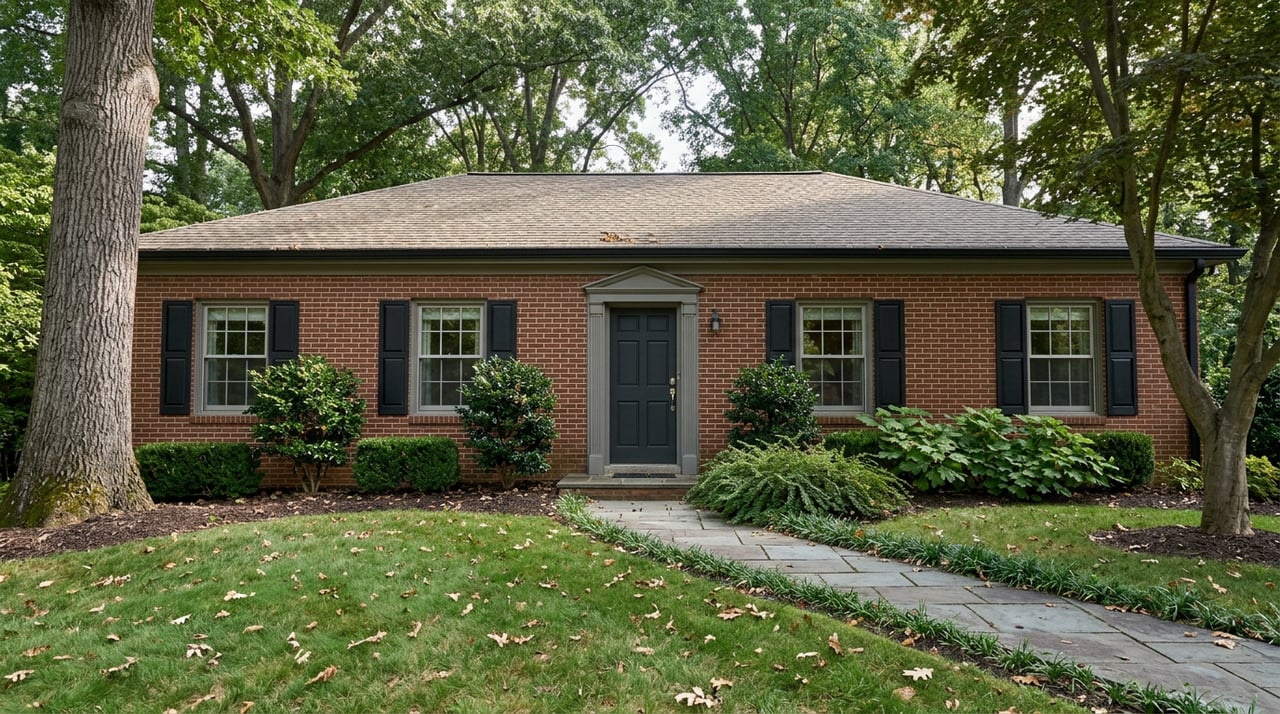
Who pulled the permit for the primary suite addition on that 1962 ranch near Chastain Park, and how would you find out before you write an offer? For a lot of Sandy Springs buyers, the honest answer is that they wouldn't think to ask, because they assume a seller has to tell them anyway. In Georgia, that assumption is wrong, and it happens to be wrong at the exact moment Sandy Springs is tearing down and rebuilding more of its older housing stock than it has in years.
That combination, a legal system with no mandatory disclosure form and a physical market full of homes that have been renovated, flipped, or partially rebuilt, is the thing worth understanding before you compete for a listing here. The good news is that the gap the law leaves open has a public workaround, and it costs nothing to check.
Georgia's Rule Is Narrower Than Most Buyers Expect
Georgia is a caveat emptor state. No statute requires a seller to complete a property condition disclosure form of any kind. What the law does require is narrower and easy to miss: sellers must answer a buyer's direct questions truthfully under Georgia Code 44-1-16, and the seller's agent has a separate duty under Georgia Code 10-6A-5(b) to disclose known material adverse facts about the physical condition of the property to everyone in the transaction. Silence about a problem the seller was never asked about is legally different from lying about one.
This surprises buyers who've moved from states with a mandatory written disclosure, and it's worth naming the contrast plainly. South Carolina recently tightened its own version of the same idea. As of March 2026, South Carolina sellers must deliver a written Residential Property Condition Disclosure Statement, now Form 312-R, within five calendar days of a property hitting the MLS or any public marketing platform, and the revised form added mandatory fields for prior water intrusion insurance claims and the presence of polybutylene plumbing. Georgia has no equivalent countdown clock and no equivalent mandatory field list. If you've bought or sold across the state line, the instinct to expect a similar form here is exactly the instinct that doesn't hold up in a Sandy Springs contract.
The 2026 Forms Tightened Language, Not Obligations
Georgia's real estate industry did update its paperwork this year, and it's worth knowing what changed and what didn't. The Georgia Association of Realtors revised its F301 and F302 forms for 2026, along with the Community Association Disclosure and lead-based paint documentation. The revisions rewrote the flooding and water intrusion section to cover more of the ways a buyer might need to ask about past damage, and added a clarified warning that Georgia is a buyer-beware state directly onto the F302 Latent Defect Disclosure itself. None of this made the form mandatory. The F302 remains an option a seller can choose to complete, typically when they have limited firsthand knowledge of the property's history, and the Community Association Disclosure is not a legal requirement for a valid contract either. The forms document what a seller is willing to say. They don't create a new duty to say it.
"Georgia remains a caveat emptor state."
That line, from a 2026 breakdown of the revised GAR forms, is the whole doctrine in five words. The obligation to disclose a known latent defect exists whether or not any form gets used, and the absence of a form is not the absence of risk, it's the absence of a paper trail.
Sandy Springs Is Also Mid-Turnover
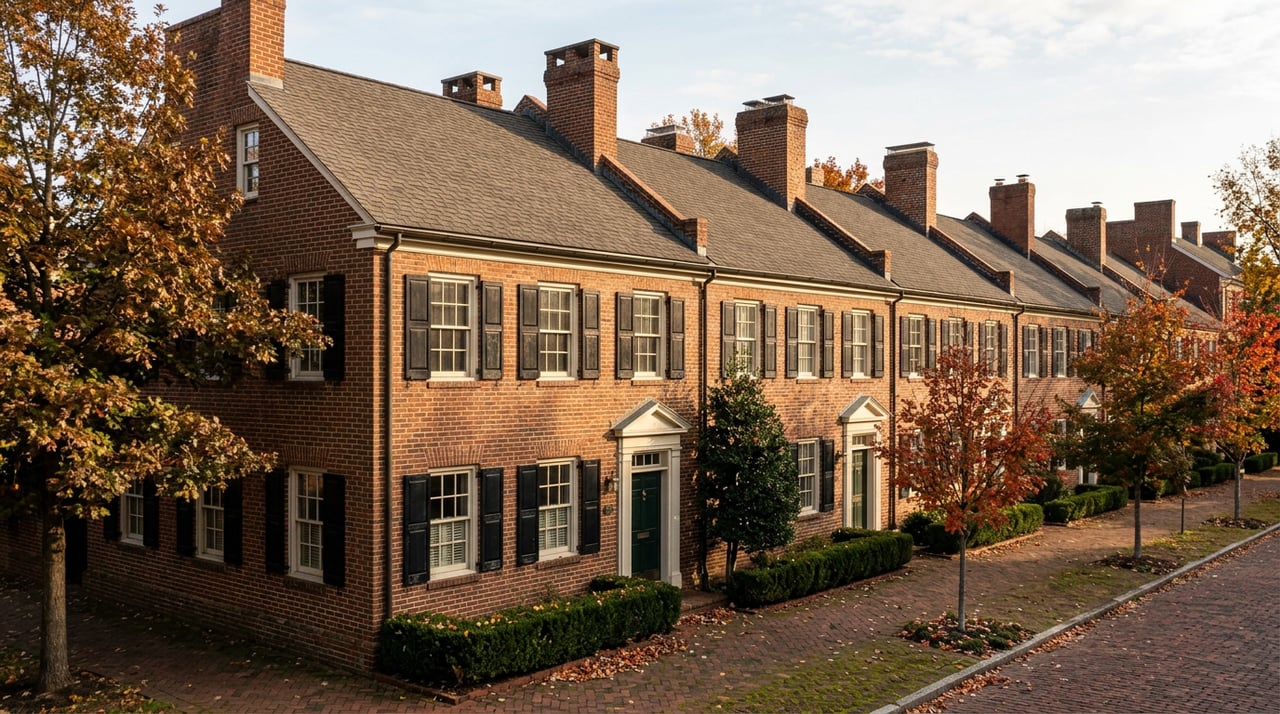
Here's where the local market makes the legal gap matter more than it would somewhere with less renovation activity. Chastain Park and Meadowbrook are described by builders working in the area as two of the most active infill markets in Sandy Springs right now, with 1950s ranch homes being purchased and replaced by new custom estates because land values in those established, tree-canopied neighborhoods have outpaced what the original small houses are worth on their own.
The pace of turnover shows up in the city's own zoning record too. In May 2026, the Sandy Springs City Council unanimously approved three new subdivisions, the largest at the Dunwoody-Sandy Springs border along Spalding Drive northeast of Pitts Road, where a rezoning from a one-acre minimum lot size to a 9,000-square-foot minimum will let a 21-home subdivision replace what had been five larger residential lots. Across the three approvals, the city is set to add 26 new single-family homes where just seven used to stand. That's not a story about a handful of scattered teardowns. It's a city processing lot splits and rebuilds as a routine part of its current development pipeline.
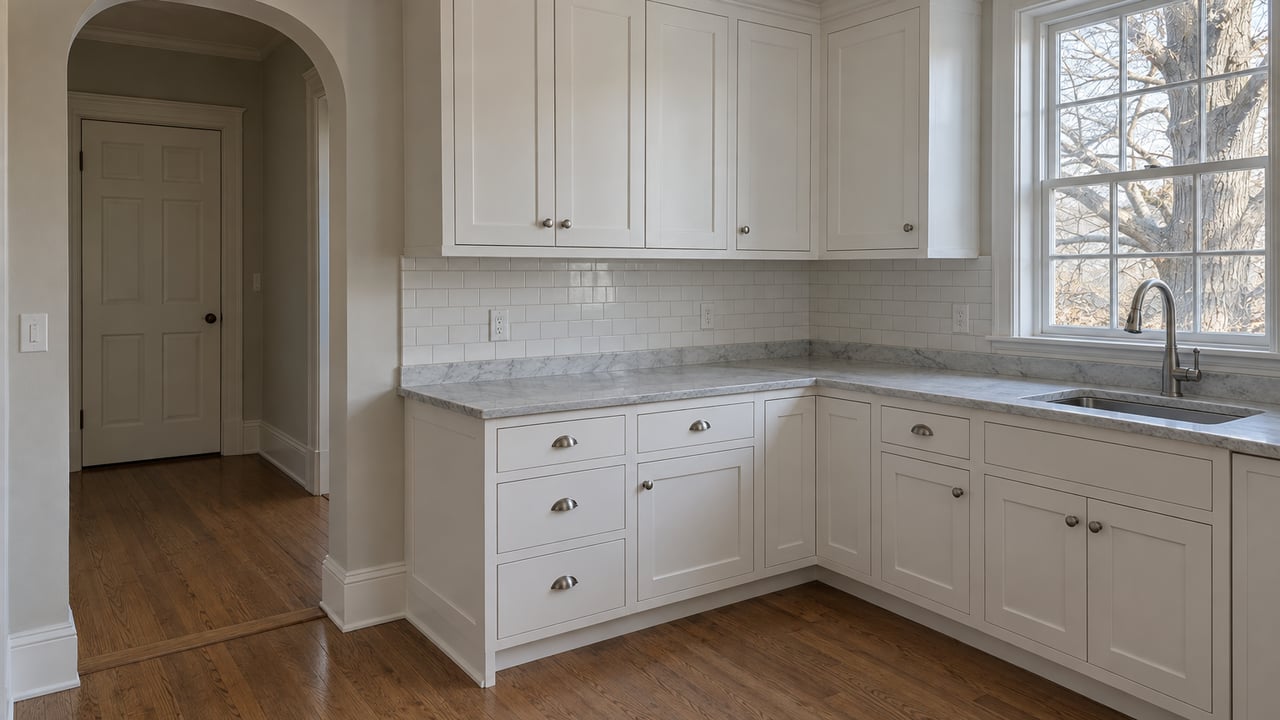
Every one of those transitions, whether it's a full teardown or a partial renovation of an existing ranch, generates a moment where structural, electrical, or plumbing work happens on a property that will eventually get sold with no legal obligation for the seller to hand over what was done.
What Inspectors Are Actually Finding Behind the Renovations
Local inspection reporting gives a fairly consistent list of what turns up in Sandy Springs specifically, and it lines up with the age and renovation mix described above. Established neighborhoods built between the 1960s and 1990s frequently still have original electrical panels, including recalled Federal Pacific panels, and aging plumbing that can include polybutylene supply lines. Expansive red clay soil, common throughout the city, swells during wet periods and shrinks in dry ones, which shows up as stair-step cracking in drywall and brick as foundations shift with the seasons. Homes near the Chattahoochee River corridor, which the city defines as any property within 2,000 feet of the riverbank, face additional foundation and crawlspace moisture questions tied to that proximity, and are subject to added scrutiny in the construction permitting process itself.
Layer the redevelopment wave on top of that baseline and a second category of defect appears. Inspectors working the current Sandy Springs market, from luxury teardowns to smaller condo flips, describe frequently finding unpermitted structural alterations, amateur electrical wiring, and improperly flashed decks left behind by past do-it-yourself renovations. None of that is unique to Sandy Springs. What's specific to this market right now is how much of the current inventory has passed through a renovation or partial rebuild recently enough that this kind of shortcut is still hiding behind fresh paint rather than decades of settled use.
| Housing profile | What buyers typically ask about | What a permit search can independently confirm |
|---|---|---|
| Untouched 1960s-1990s home | Roof age, HVAC age, original systems | Whether any major system was ever legally replaced |
| Recently flipped or renovated home | Finish quality, staging, listed upgrades | Whether the upgrades were permitted or done off the books |
| New infill build or teardown rebuild | Builder reputation, warranty terms | Foundation and rough inspection sign-offs on file |
The One Public Record That Fills the Gap
The part of this that a lot of buyers don't realize is that the seller's silence and the public record are two different things. Sandy Springs manages all of its permitting through Build Sandy Springs, the city's online portal, and the public can search past and current projects by address, permit number, date, or project name without needing anyone's cooperation to do it. If a wall came down, a panel was swapped, or a deck went up on the property you're considering, and it was done with a permit, that record exists independently of whatever the seller chooses to volunteer. If there's no record for work that's visibly been done, that absence is itself information.
This is the check that fits the Sandy Springs market specifically, because it's the one piece of due diligence that closes the exact gap the caveat emptor rule leaves open. Georgia doesn't require the seller to tell you what was done. It doesn't stop you from finding out through the city's own files before your due diligence period, typically seven to ten days on a Sandy Springs contract, runs out. A standard home inspection, usually $300 to $500 depending on the size and age of the home, still matters for the things a permit record can't show, like the current condition of a roof or an HVAC system nearing the end of its life. But for the question of whether the primary suite addition, the finished basement, or the new deck was actually signed off by the city, the portal answers it directly.
Sellers benefit from this too. A seller who pulls their own permit history before listing, and can point to a clean Certificate of Occupancy or Certificate of Completion, is handing a buyer's agent one less reason to slow down during due diligence. In a market where 26 new homes are replacing 7 and established ranches keep changing hands for rebuilds, that kind of documentation is starting to function less like paperwork and more like proof.
If you're weighing a purchase or a listing in Sandy Springs and want a second set of eyes on what the permit history actually shows for a specific address, Barnes Young Team can help you pull that record before you write the offer or sign the listing agreement.