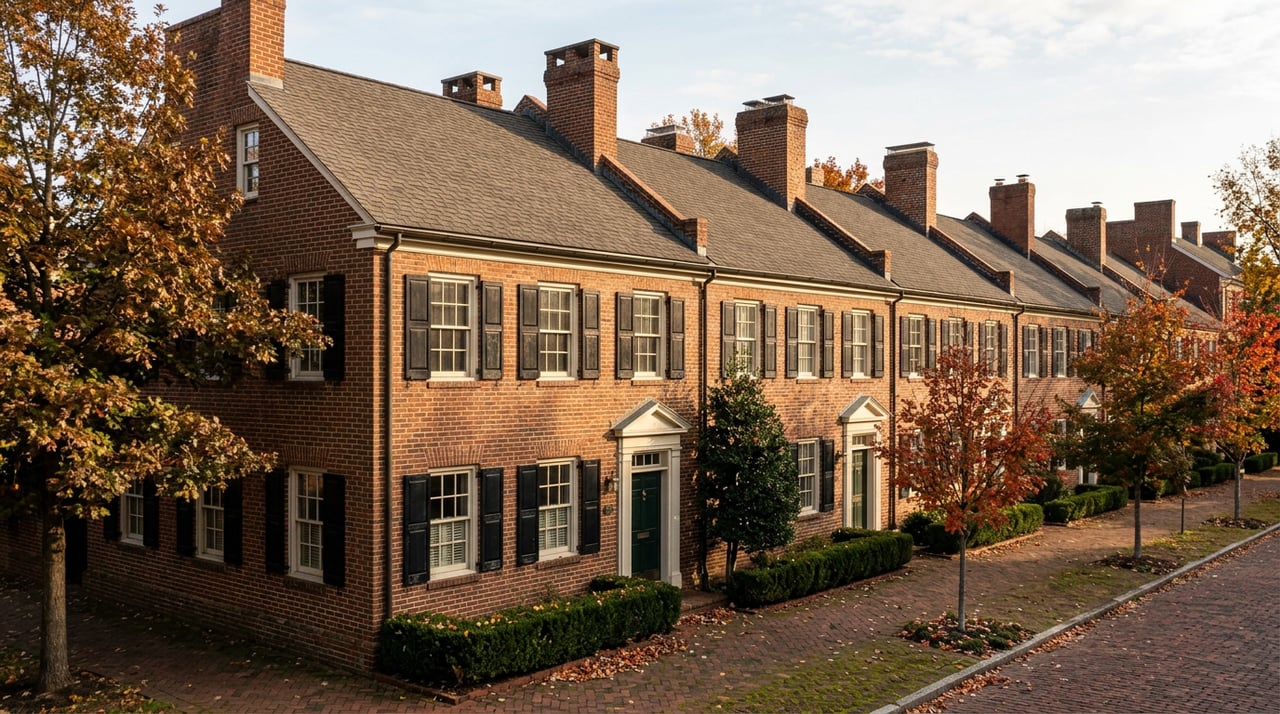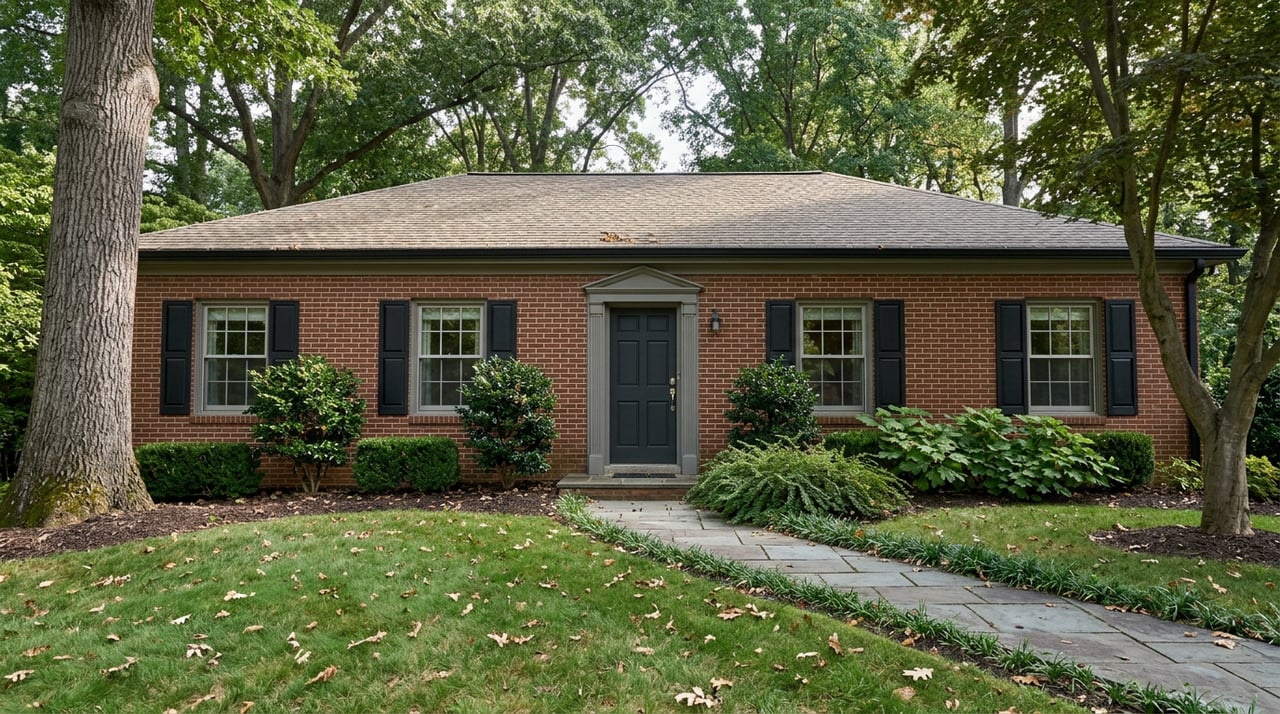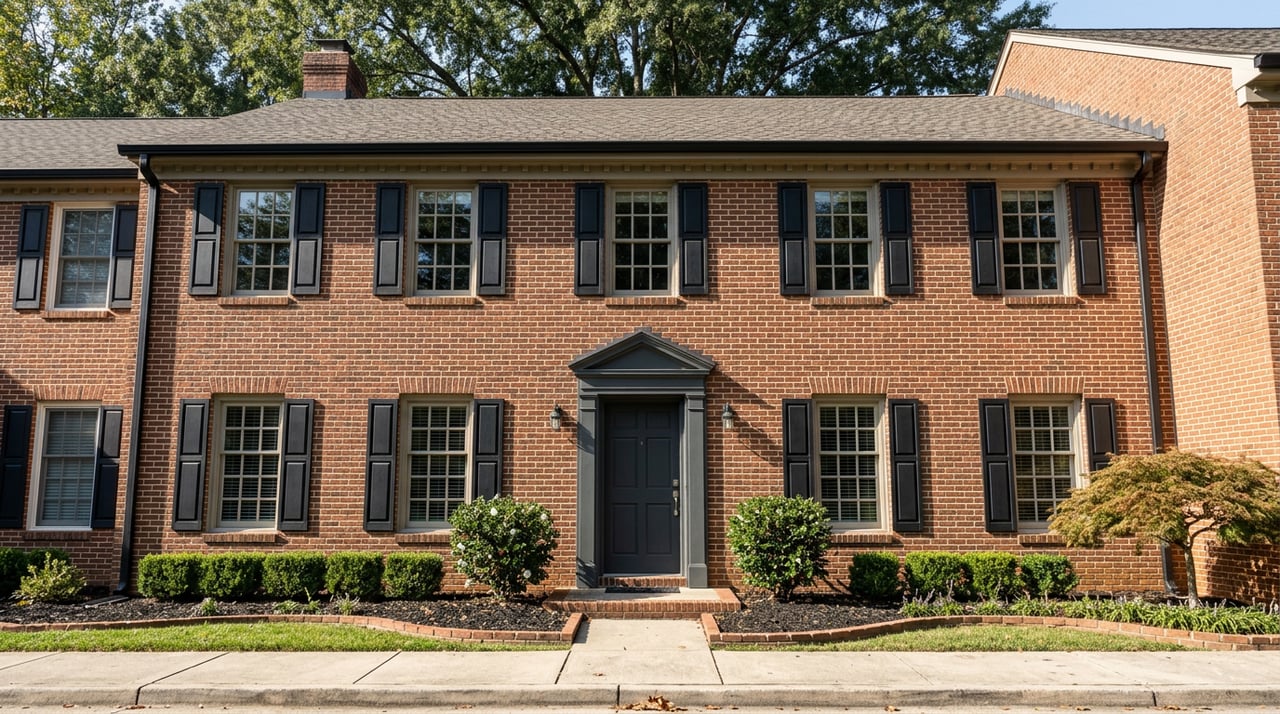
On the south end of Buckhead, a set of brick buildings from 1929 sits back from Peachtree Street behind mature landscaping. The property, known as Huntington Arms, was built as an apartment complex and converted to condominiums about fifty years later. For most of that history, the boilers worked, the pipes held, and the monthly dues stayed low. Then the boilers started failing. Windows leaked. Basements flooded. In 2022, the homeowners association board raised monthly dues from $450 to $591, because the reserve fund had almost nothing in it. That same year, the board voted to charge every owner roughly $5,000 to replenish reserves.
None of that violated Georgia law. That is the part most condo buyers never think to ask about, and it is the reason two Buckhead condos with identical list prices can be completely different financial bets.
The paper Georgia requires you to see
Georgia's Condominium Act does require something specific here. When a condo unit resells, the seller has to hand the buyer a budget that itemizes reserves, among other line items. On paper, that sounds like protection. In practice, it protects you from not knowing a number exists. It does nothing to confirm the number is right.
That is a meaningful gap once you compare it to what other states now require. Florida, after the Surfside collapse, passed a law forcing associations in buildings three stories or taller to commission a structural integrity reserve study every ten years, with the first round due by the end of 2024. Georgia has no equivalent. There is no statute requiring a Buckhead condo association to commission a reserve study at all, no statute setting a minimum funding percentage, and no state agency checking anyone's math. A board can hire a professional engineer to project every future repair cost, or a board can guess. Both boards produce a budget with a line labeled "reserves." Only one of those numbers means anything.
A reserve line item is not proof of a reserve. It is proof someone wrote a number down.
Same zip code, two different bets
Huntington Arms and a project called Elyse Buckhead sit within a few miles of each other, and they represent opposite ends of the risk you are actually buying when you buy a Buckhead condo.
Huntington Arms carries decades of deferred maintenance inside a building the state never required anyone to formally evaluate. The dues increase and the special assessment in 2022 were the board finally catching up, not the state catching the board. If you buy resale in an older Buckhead tower, that is the risk you are pricing: an association that may or may not have kept up, with no external check forcing the question.
Elyse Buckhead is the opposite bet. Kolter Urban broke ground on the twenty-story tower at 102 West Paces Ferry Road, next to the St. Regis Atlanta, this past spring, with the 194-unit project already nearing $60 million in presale contracts. Delivery is expected in late 2028 into early 2029. A building that does not exist yet has no deferred maintenance and no reserve shortfall, because it has no history at all. What it has instead is a developer-set initial budget and, for the first stretch of ownership, a developer-controlled board during the transition period before unit owners take over governance. You are not avoiding the reserve question by buying new. You are just answering it with trust in the builder instead of trust in an inspection report.
Neither bet is automatically better. They are different questions, and a buyer who does not know which one they are answering is the buyer who gets surprised later.
What a Buckhead condo listing price does not tell you
Buckhead's condo market looks approachable on the surface. Listings have clustered around a median in the low $300,000s this year, well under the broader Buckhead median sale price, which has been running in the high $600,000s to $700,000s depending on the trailing window you check. That gap is real, and it is a genuine reason condos draw buyers who want into Buckhead without a single-family budget.
What the sticker price will not tell you is what the building actually costs to carry. Monthly HOA dues across Buckhead's condo towers span a wide range, from roughly $1,000 a month in some established buildings to well over $4,000 a month at the most amenity-heavy addresses, where dues fund full-time staff, valet, and hotel-grade service alongside reserves. A lower unit price with a poorly funded reserve can end up costing more over five years than a higher unit price in a building that has been funding correctly all along, because the first building eventually has to catch up all at once. The listing price is the entry fee. The reserve fund determines whether you pay again later, and whether you get to choose when.
The documents to request before your due diligence period ends
Because Georgia will not do this checking for you, it falls to you and your agent. Before you waive due diligence on a Buckhead condo, request:
- The current association budget, with reserve line items broken out, not summarized
- The most recent reserve study, if the association has ever commissioned one. Many older buildings never have, and that absence is itself information
- Board meeting minutes from the past twelve to twenty-four months, which is usually where a pending assessment shows up before it becomes official
- The master insurance policy and its deductible, since a large deductible after a claim can become a bill split among owners
- A written special assessment history, not just a verbal assurance that none are planned
- The resale or estoppel certificate, which confirms amounts currently owed and any assessment already voted on but not yet billed
A board can answer these requests honestly and still hand you a building with real problems ahead. But a board that stalls, or that cannot produce clean minutes, is telling you something on its own.
A new state law is about to add a paper trail
Governor Kemp signed the Georgia Property Owners' Bill of Rights Act into law on May 12, 2026. Most of it takes effect January 1, 2027, though the provisions governing attorney fee collection and required notice periods took effect this past July. The headline change for buyers is registration. Every homeowners and condominium association in Georgia will have to register annually with the Secretary of State and file a financial statement dated within the prior twelve months. An association that fails to register loses the ability to collect fines, place liens, or foreclose, which gives boards a real reason to comply rather than ignore the requirement.
For a buyer, this changes the verification question starting in 2027. Instead of relying entirely on what a seller chooses to hand over, you will be able to ask whether the building's association is registered at all, and an unregistered association becomes its own warning sign. It will not replace the documents above. It adds one more place the truth has to show up on paper.
Frequently Asked Questions
Does buying new construction eliminate special assessment risk? No. It removes the deferred maintenance risk that comes with age, but it introduces a different one: trusting a developer's initial reserve contributions and the developer-controlled board that typically runs the association until enough units have sold to trigger owner-elected governance.
If a building has never had a reserve study, is that automatically a red flag? Not automatically, since Georgia does not require one. It is a reason to look harder at the budget itself, ask the board directly whether a study has ever been discussed, and treat the absence as a gap to fill with your own due diligence rather than an assumption either way.
Where do I find a building's special assessment history if the seller does not volunteer it? Start with the resale or estoppel certificate, which discloses amounts currently due and assessments already approved. Board meeting minutes from the past two years are the next place a pending vote usually surfaces before it becomes public.
Buying or selling a condo in Buckhead is rarely just about the unit. It is about the financial health of a building you do not control, governed by rules most buyers never read closely enough. That is exactly the kind of detail our team walks through line by line, building by building, before you are the one signing at closing. If you are weighing a Buckhead condo purchase or preparing to sell one, Barnes Young Team is ready to schedule a consultation to discuss your next move.