If you have spent any part of this summer watching Dunwoody listings, you have probably run into a number that does not sit right. The median sale price is climbing. The price you pay for each square foot is not. Homes are also selling faster than they were a year ago. Put those three facts next to each other and the market looks like it is doing two things at once: getting more expensive and getting cheaper, at the same time, in the same city.
It is not a data error. It is a mix shift, and once you see it, it changes how you should read every other Dunwoody number you come across this year, including the ones you will get from a portal search or a lender's pre-approval letter.
The three numbers, side by side
Over the three months ending May 2026, the median sale price in Dunwoody was $712,000, up 5.1 percent from the same window a year earlier. In that same period, the median price per square foot slipped to $247, down 5.2 percent year over year. And homes went under contract in a median of 16 days, down from 22 days the prior year.
Read those together and the story is not "the market cooled" or "the market overheated." A market that is genuinely softening usually shows rising days on market and falling prices together. A market that is genuinely overheating shows both price and price-per-square-foot climbing in tandem. Dunwoody is doing neither. Demand is strong enough that homes are moving faster than they did last year, yet the per-foot number buyers actually pay is falling. The only way to get that combination is if the average home selling today is simply bigger than the average home that sold a year ago.
That single insight is the thesis worth carrying into any Dunwoody comparison: the citywide median is not describing one housing market. It is blending at least three.
Same city, three different products
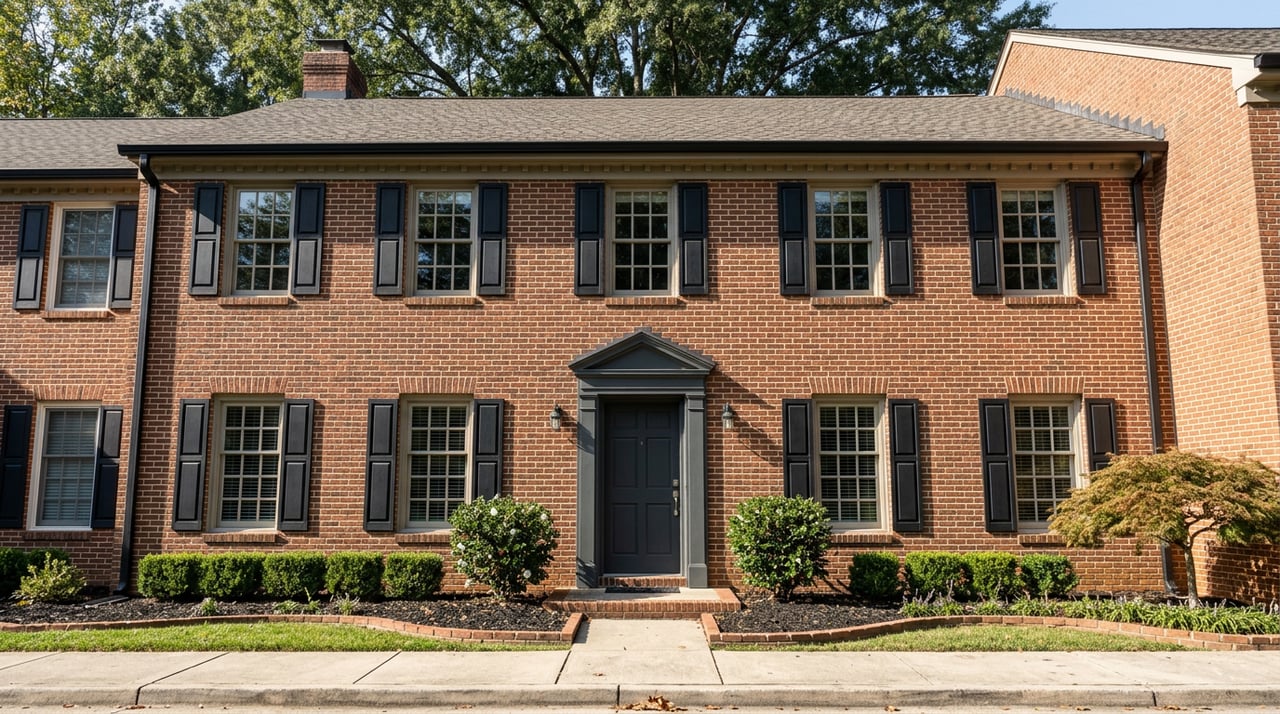
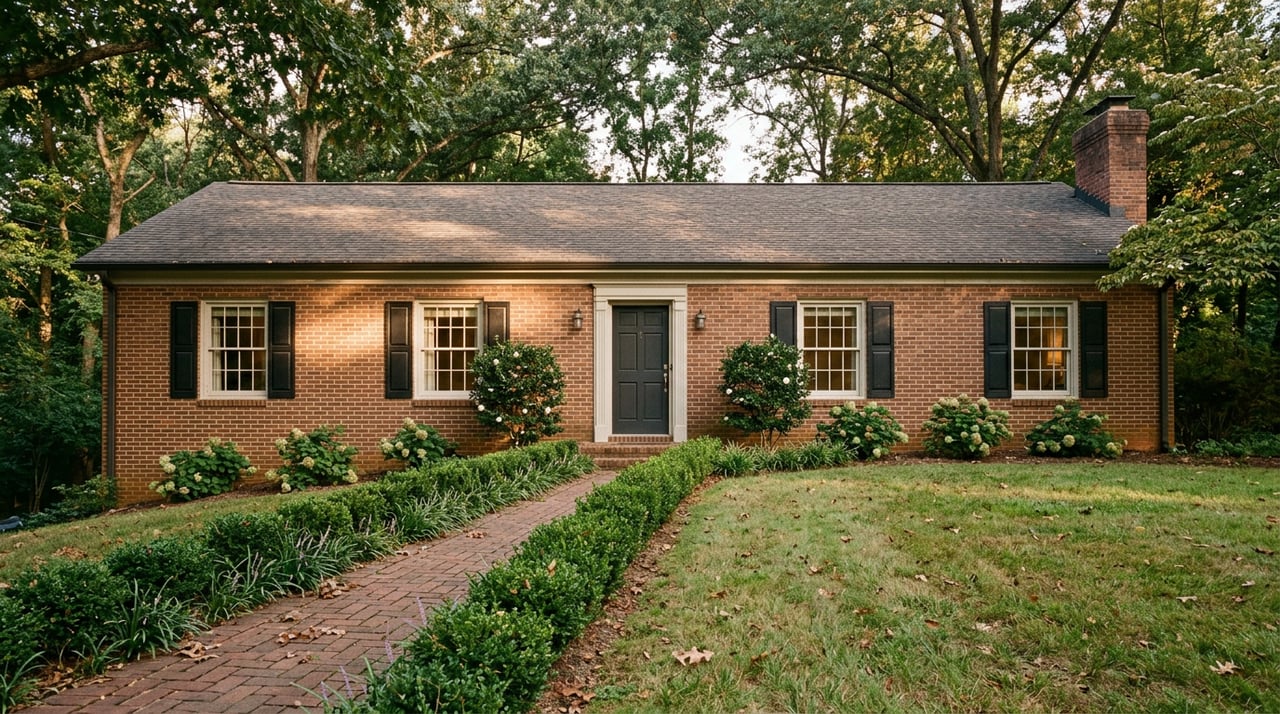
Dunwoody's zip codes contain a historic walkable village, a corridor of mid-century ranches and split-levels on generous lots, and a high-rise commercial district that is actively being converted into housing. Pricing behaves differently in each one.
| Zone | What's there | Typical price signature |
|---|---|---|
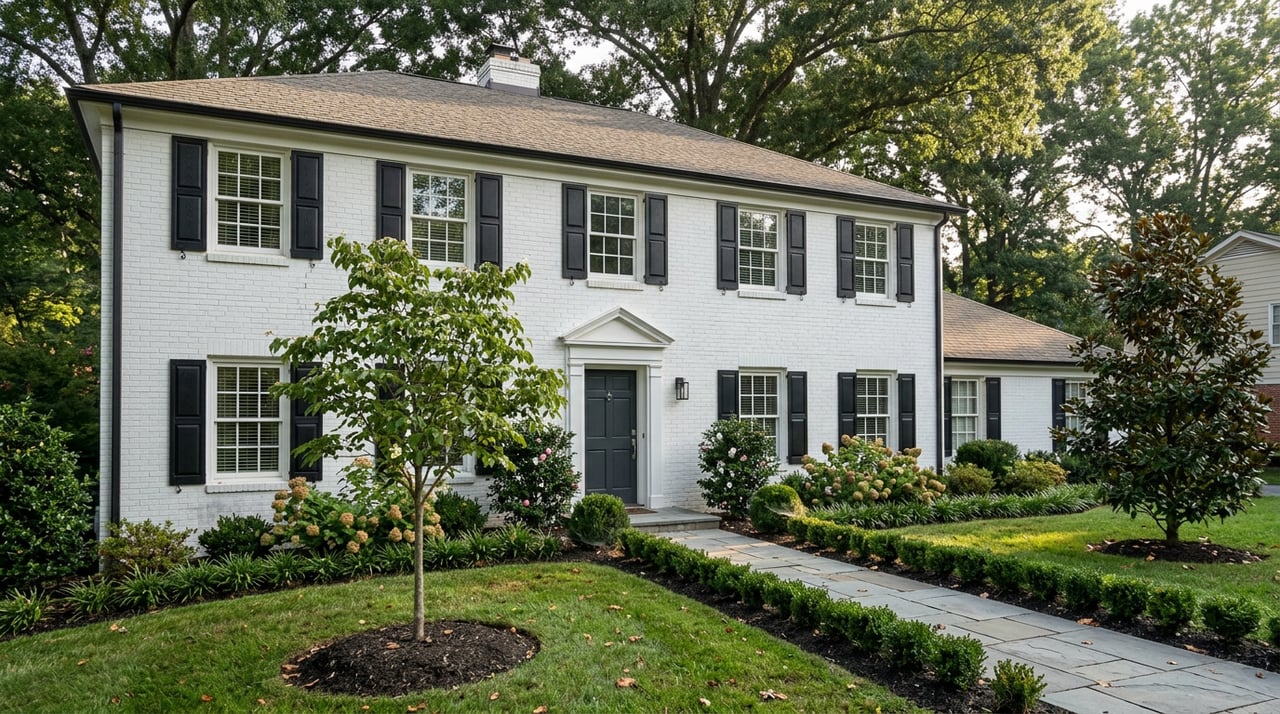
| Dunwoody Village | Renovated colonials and new construction on established lots, Williamsburg-style architecture, walkable core | Renovated homes and new builds reaching past $1.5 million |
| Georgetown and Vermack | Ranches and colonials from the 1960s through the 1990s on mature, often half-acre-plus lots | Entry points starting below $500,000, the corridor's best value per square foot |
| Perimeter Center | High-rise condo towers, new townhomes, direct MARTA access | Condos priced in the mid-$300,000s, single-family homes in the corridor closer to $800,000 |
A buyer using the citywide median as a stand-in for what any of these three zones actually costs is comparing apples, a different kind of apple, and something that is not an apple at all. That is a problem whether you are cross-shopping Dunwoody against Sandy Springs or Roswell, or trying to figure out what a specific street inside Dunwoody will cost you.
Why the median is skewing toward bigger homes right now
The Georgetown and Vermack corridors are where the mix shift is happening most visibly. Housing stock there was built between the 1960s and the 1990s, and most of it was designed around closed-off kitchens, undersized primary suites, and basements treated as an afterthought rather than usable square footage. That layout does not match what buyers expect from a home in this price range today.
Two things are happening to that stock simultaneously. Homeowners who love their lot but not their floor plan are increasingly choosing whole-home additions instead of selling: second-story build-outs over existing single-story footprints, rear bump-outs for larger kitchens and family rooms, and finished basement conversions. Locally, kitchen reconfiguration projects that remove a load-bearing wall and add stone counters and custom cabinetry typically run $80,000 to $150,000, and that is before primary suite or basement work is added to the scope.
At the same time, other lots in the same neighborhoods are going the teardown-and-rebuild route entirely, because the mature tree canopy and generous parcel sizes in Georgetown, Vermack, and pockets of the Village make new construction on an existing lot more attractive than working around a dated floor plan. Both paths point the same direction: more square footage entering the resale pipeline, at a higher total price, without necessarily commanding a higher price per square foot than the smaller, updated home next door.
That is the mechanical answer to the puzzle. The median is rising because bigger homes are transacting. The per-square-foot number is not rising in step because a bigger home does not automatically command a proportionally bigger per-foot price. Land, lot depth, and rebuild costs get absorbed into the total price in ways that do not always show up cleanly in the interior-square-footage math.
The pipeline that could rewrite this again
The Georgetown and Vermack story explains what has already happened to the mix. Perimeter Center is where the next shift is coming from, and it is worth tracking closely if you are timing a purchase around it.
Several residential conversions are moving through the city's approval process at once:
- Developers proposed converting the office tower at 64 Perimeter Center East into 169 condominiums, paired with a plan for 101 townhomes and 119 age-restricted apartments next door at 66 Perimeter Center East. City Council approved the multifamily and townhouse rezoning at 66 Perimeter Center East in September 2025, with construction discussed as possibly starting in early 2026.
- The first phase of High Street, the $2 billion mixed-use development at Perimeter Center Parkway and Hammond Drive, has already delivered 598 luxury apartments and 150,000 square feet of retail.
- The Georgetown Company and RocaPoint Partners filed a rezoning request and a state Development of Regional Impact application in 2026 for a roughly 400,000-square-foot residential building at Campus 244, the 13-acre office and hotel site along Perimeter Center Parkway, a project the Atlanta Journal-Constitution reported arrives a decade after an earlier condo tower proposal at the same site was withdrawn.
Most of this is still working through zoning review, and construction timelines depend on approvals that have not all been finalized. But the direction is consistent. Perimeter Center is adding new-construction condo and townhome product to a corridor that currently sells single-family homes at roughly $806,000 and condos closer to $365,000. New-construction condos typically price at a premium per square foot compared with older resale product. If even a portion of these units lands in the for-sale market over the next few years, it will pull the Perimeter Center price-per-square-foot number in the opposite direction from where Georgetown and the Village are currently pulling it.
In other words, today's falling citywide price-per-square-foot is not a permanent trend. It is a snapshot of what happens to a blended number when big single-family homes dominate the current mix. The next phase of Perimeter Center construction could just as easily reverse it.
What this means if you're comparing Dunwoody to another suburb
If you are weighing Dunwoody against Sandy Springs, Roswell, or Buckhead using median price alone, you are comparing a number that is quietly averaging a sub-$500,000 Georgetown ranch, an $800,000 Perimeter Center single-family home, and a Village colonial priced well past $1.5 million. None of those buyers are shopping in the same market, even though they show up in the same citywide statistic.
The more useful question is not "what is Dunwoody's median price" but "which of these three Dunwoodys am I actually comparing against my other options." A Georgetown ranch with room to renovate competes on a completely different axis than a walkable Village colonial or a Perimeter Center condo with MARTA access. Once you know which product you are shopping for, the citywide number stops being useful and the zone-level picture becomes the one that matters.
A few questions worth asking before you commit to a zone
Is Dunwoody currently a buyer's market or a seller's market? Based on the trailing data through May 2026, the market overall favors sellers: days on market compressed to 16 and months of supply has been tightening. That said, conditions vary meaningfully by zone and price point, and a Georgetown ranch competing against renovation-minded buyers behaves differently than a Perimeter Center condo competing against new construction.
Will the new Perimeter Center units affect resale values in Georgetown or the Village? Not directly on a comp-by-comp basis, since they are a different product type. But they will continue to move the citywide median and price-per-square-foot figures, which matters if you are using those citywide numbers as a stand-in for a specific zone's value.
Should I wait for the Perimeter Center projects to deliver before buying? Several are still in rezoning or state review, and construction timelines have not been finalized across the board, so this is not a short-term supply answer. It is a longer-range trend worth discussing with someone who is tracking the approvals as they move.
Numbers like these read differently depending on which corner of Dunwoody you are actually trying to buy into, and the gap between the citywide average and your specific street can be significant. If you are comparing Dunwoody against another northern Atlanta suburb, or trying to figure out which of its three markets fits what you are looking for, the Barnes Young Team is happy to walk through the zone-level numbers with you. Schedule a consultation to discuss your next move.